

Secondary Ion Mass Spectrometry (SIMS) is a highly sensitive surface analysis technique used to determine the elemental, isotopic, and molecular composition of solid materials. It is capable of detecting all elements, with detection limits down to the parts-per-billion (ppb) range for some elements—making it one of the most sensitive surface analysis techniques available.
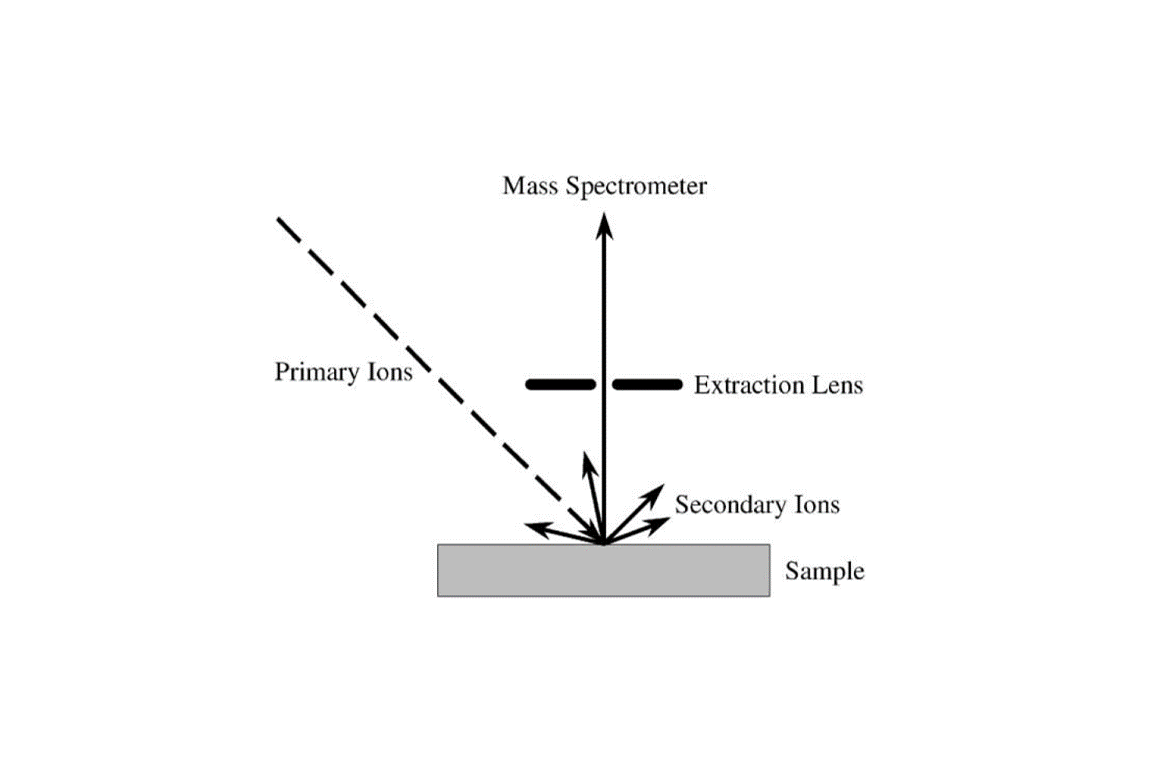
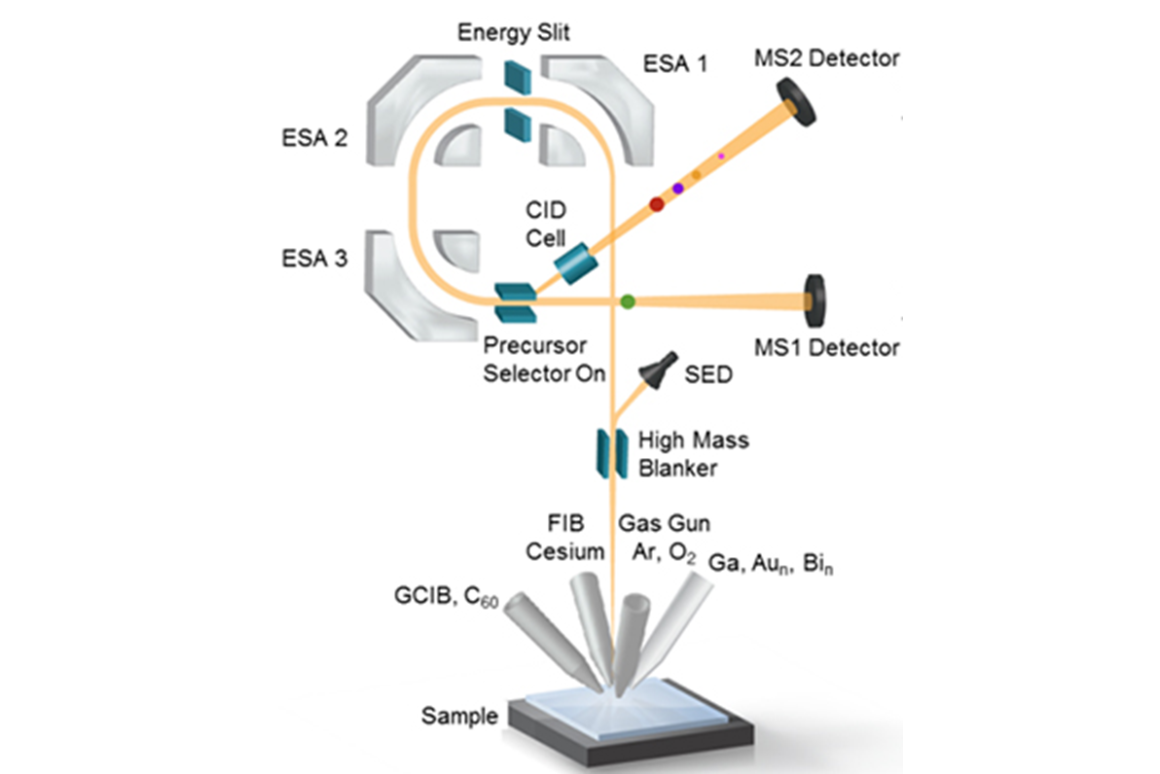
SIMS works by bombarding a sample surface with a focused beam of primary ions. This impact causes atoms and molecules to be sputtered (ejected) from the surface. A portion of these sputtered particles become ionized, forming secondary ions. These secondary ions are then extracted into a mass spectrometer, where they are separated according to their mass-to-charge ratio (m/z) and detected.